KATY & HOUSTON · ENGLISH Y ESPAÑOL
Your team closes the job. We make sure it reaches them.
The 7 pm call, the Spanish caller, the RFQ: caught, written up in English, and on your person’s desk by morning.
AI and your people, on the same job.
Came in overnight
- 7:12 pmCall after closing
- Español“¿Pueden venir mañana?”
- InboxRFQ: 6 pallets, quote by Friday
Morning, here’s last night
- Call
- Repair, Katy · call back 8 am
- Español
- New customer · wants tomorrow
- RFQ
- 6 pallets · draft quote ready
What you can count on
- 713A Katy number that reaches a person
- EN · ESSpanish callers handled, notes in English
- In writingA one-page recap after every check
- No lock-inNo automatic retainer. Stop when it stops paying.
We help your team understand AI,
and AI understand your business.
YOUR PEOPLE, WITH BACKUP
Same team, more of the work that pays.
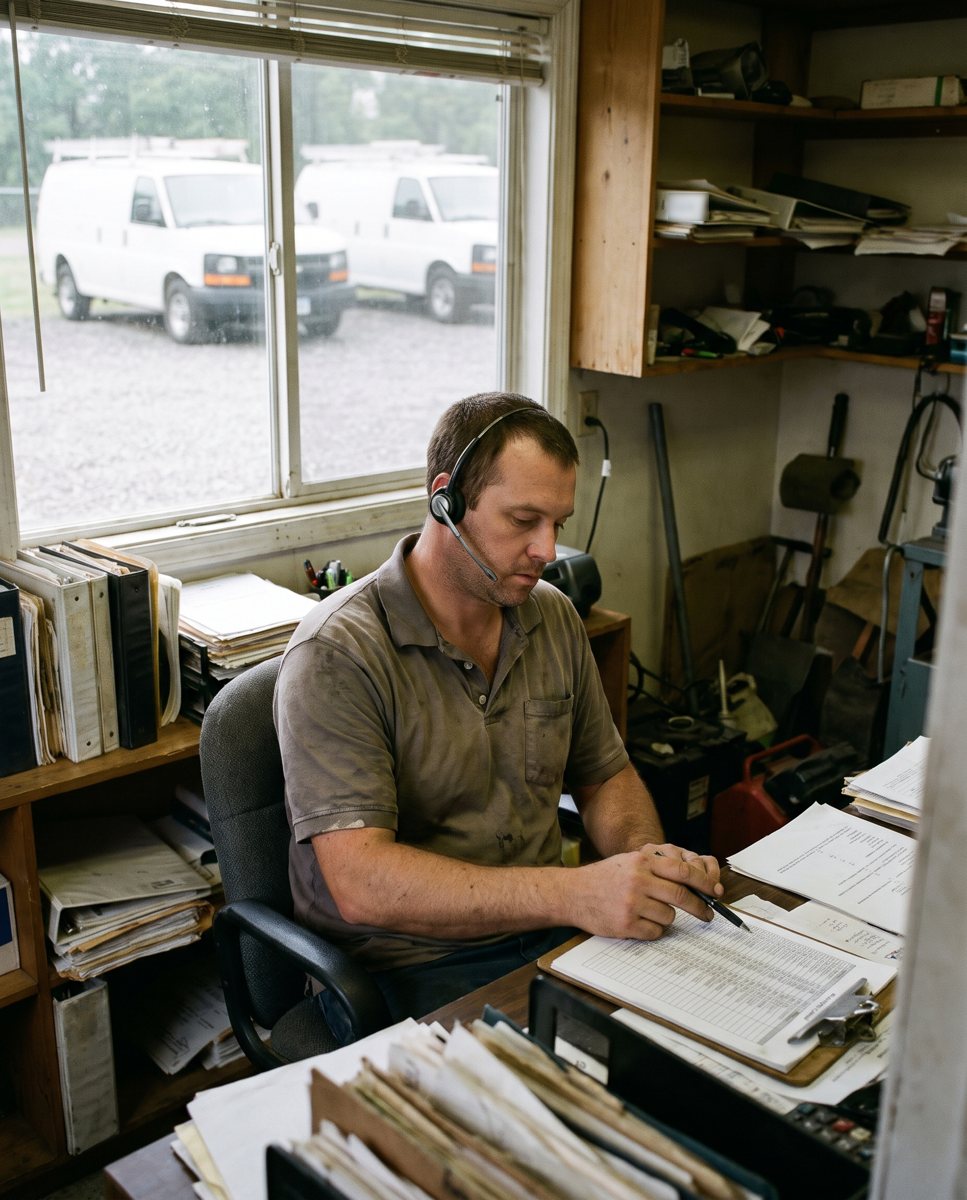
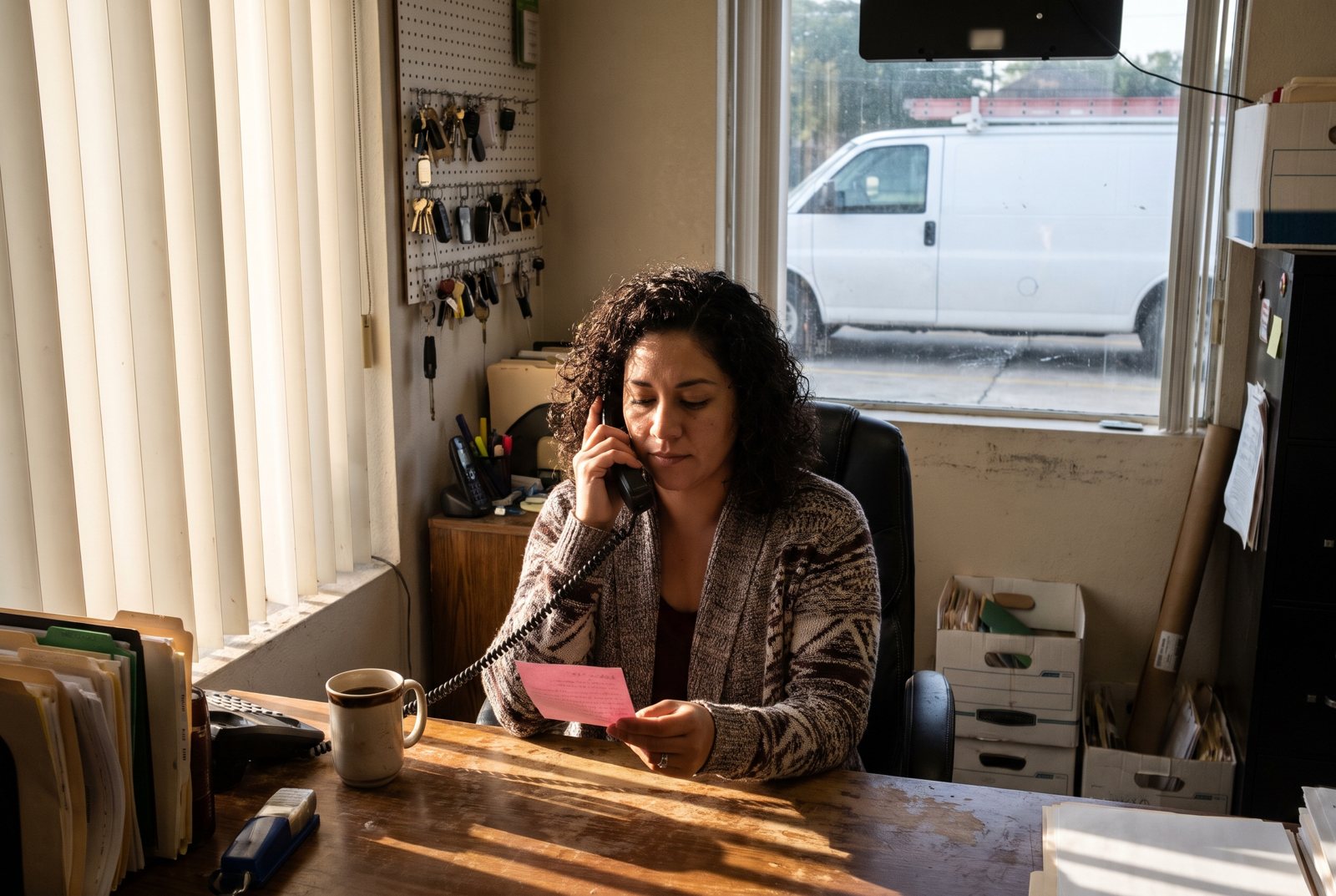
Your dispatcher
- Less time on
- Decoding voicemails.
- More time for
- Planning the day from a clear list.
- Bottom line
- Crews out by 8 am, more jobs on the board.
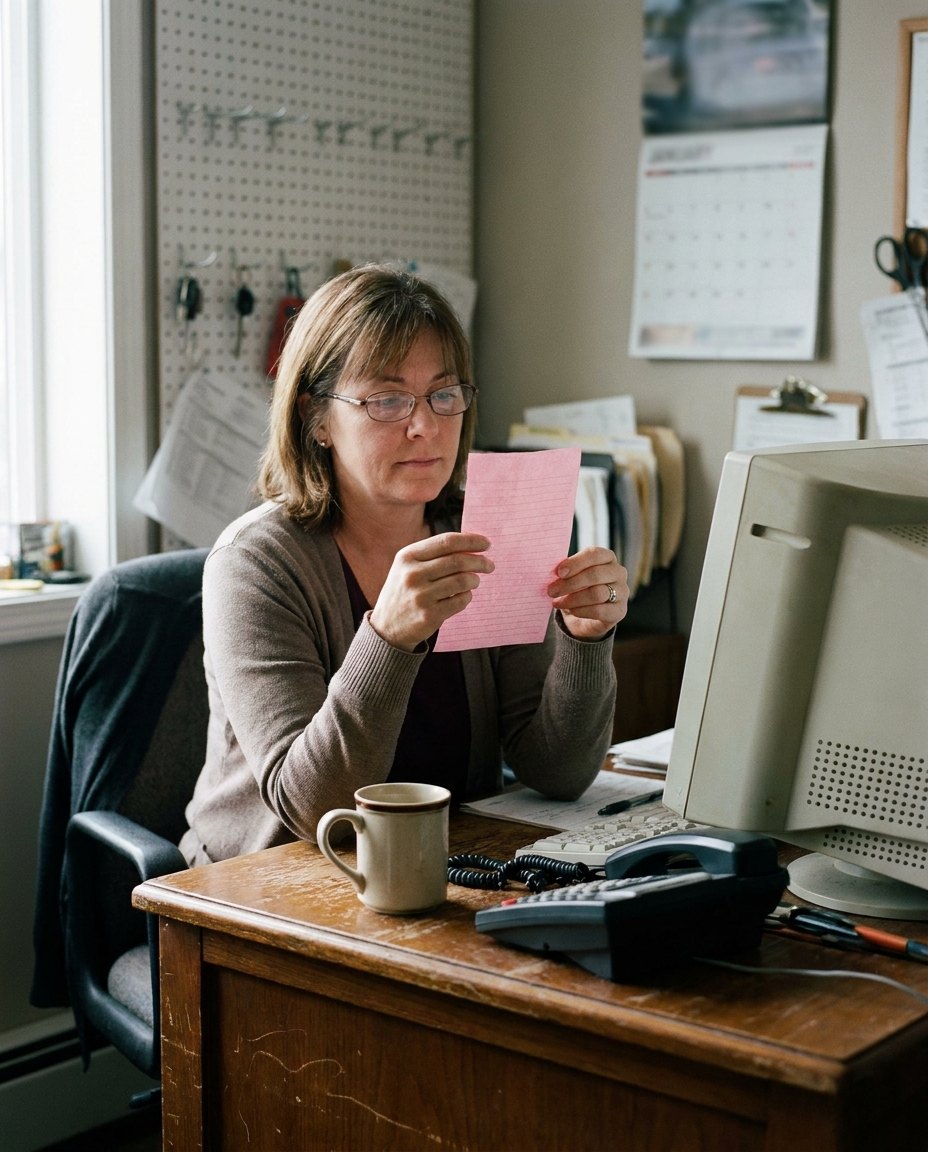
Your office manager
Caller spoke Spanish · 7:12 pm
- Needs
- Water heater leaking (attic)
- Where
- Katy 77494
- When
- Call back before 9 am
- Bottom line
- More first-thing callbacks, while the job is still open.
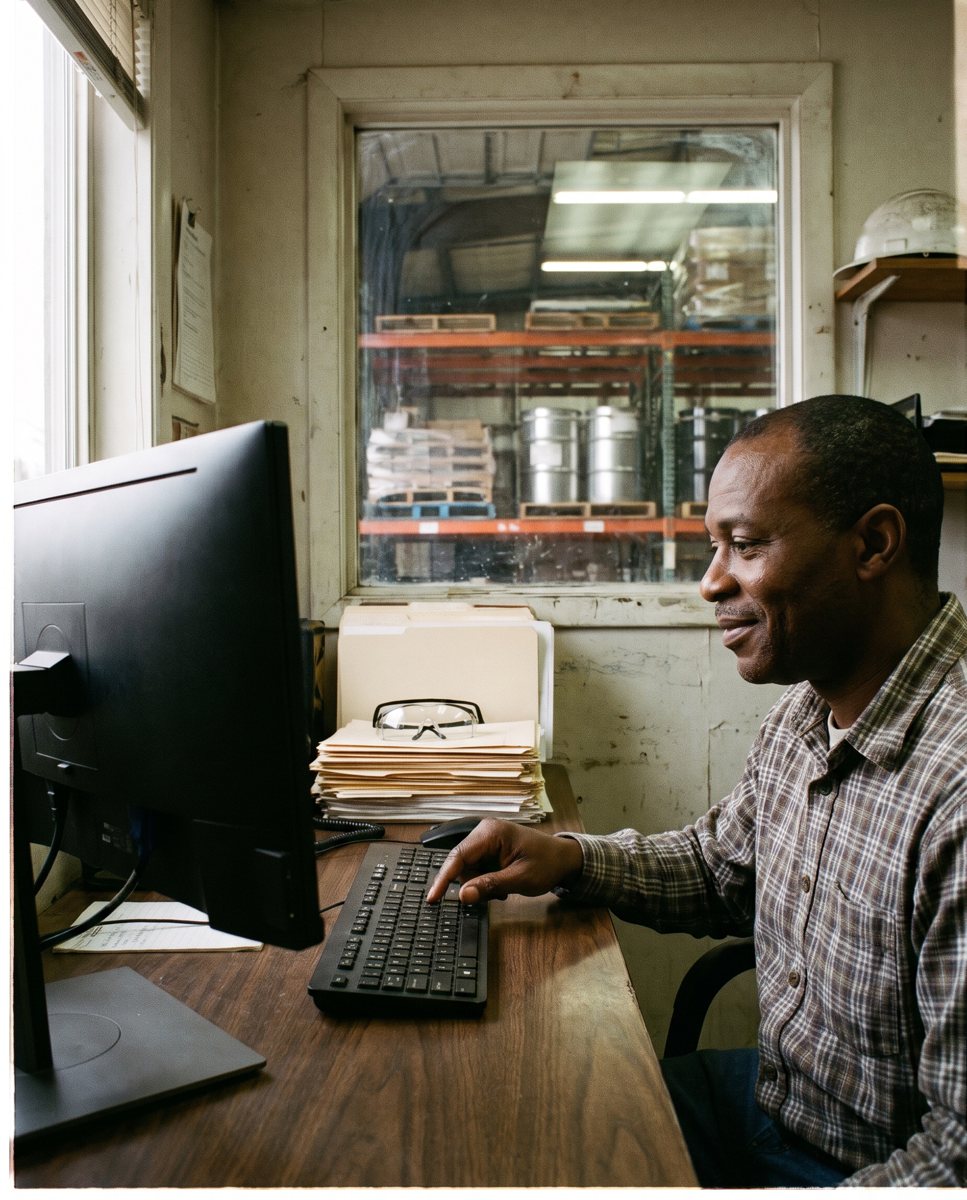
Your estimator
- Less time on
- Retyping RFQs into the quote sheet.
- More time for
- Checking prices and following up.
- Bottom line
- Quotes out the same day, while the buyer is still deciding.
EXAMPLE
One call, start to finish
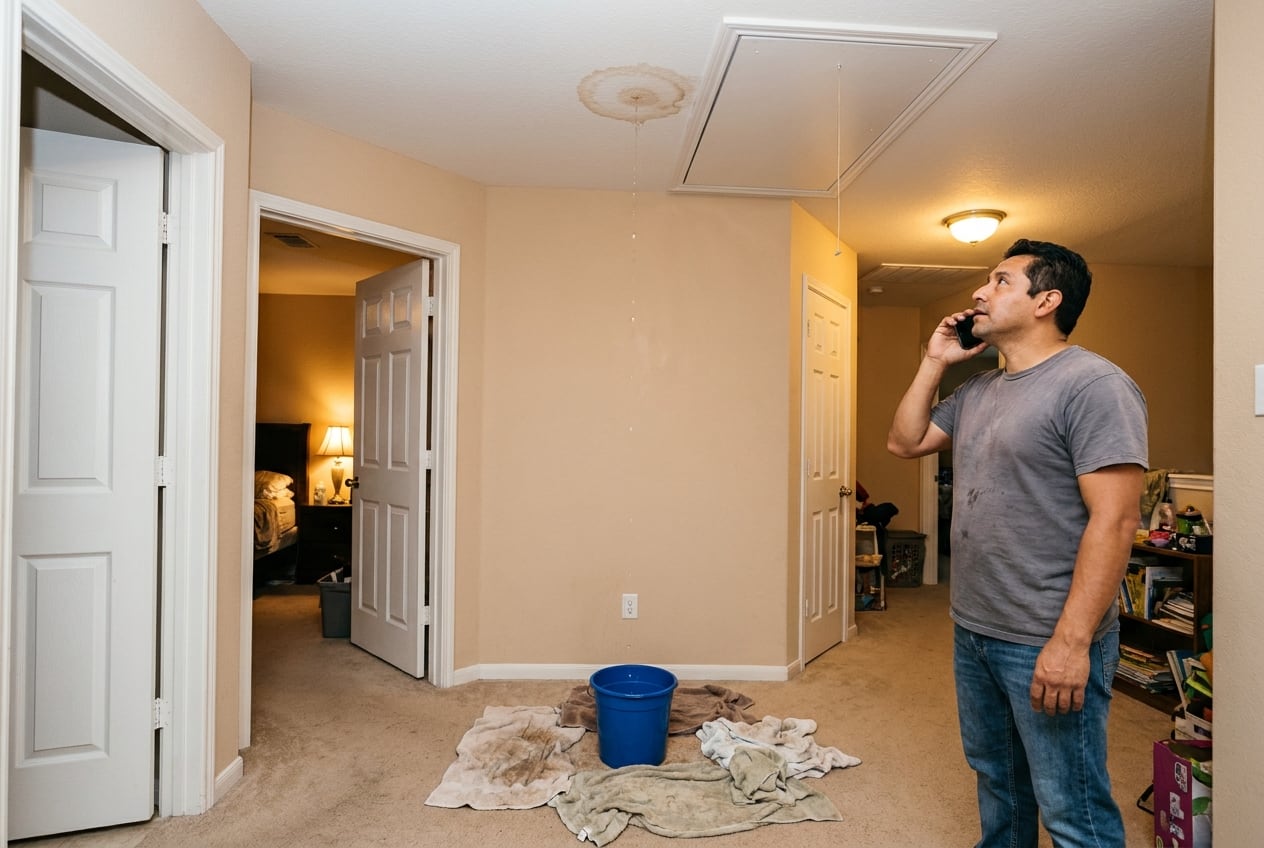
7:12 pm A caller, in Spanish, about a leak. 8:00 am Your office manager reads the note in English. 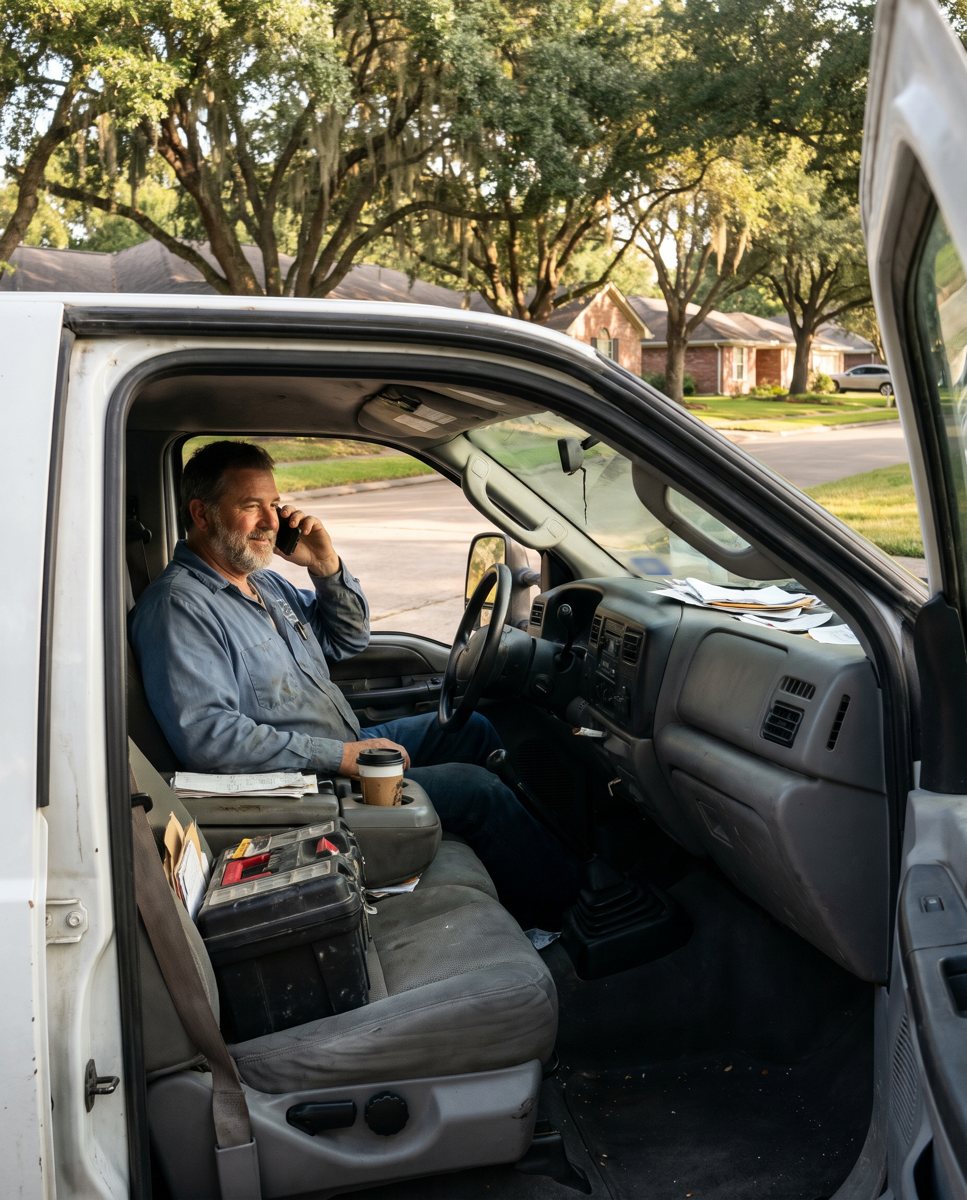
8:20 am Your tech is on the way.
7:12 pm · Example call
Sound on: scripted example call, both voices generated
Transcript
AI phone assistant: “Buenas noches, gracias por llamar. Le atiende el asistente de inteligencia artificial de la empresa; no soy una persona.” (Good evening, thanks for calling. You've reached the company's AI assistant; I'm not a person.)
AI phone assistant: “¿En qué le puedo ayudar?” (How can I help?)
Caller (generated voice): “Hola, buenas noches. Soy Salvador. Está goteando agua del techo del pasillo.” (Hi, good evening. I'm Salvador. Water is dripping through the hallway ceiling.)
Caller (generated voice): “El calentador de agua está arriba, en el ático, y creo que la charola se está desbordando.” (The water heater is up in the attic, and I think the drain pan is overflowing.)
AI phone assistant: “Siento escuchar eso, Salvador. Primero, ¿huele a gas?” (I'm sorry to hear that, Salvador. First, do you smell gas?)
Caller (generated voice): “No, no huele a gas.” (No, I don't smell gas.)
AI phone assistant: “Bien. Si llega a oler a gas, salga de la casa, no use interruptores ni el teléfono adentro, y llame a CenterPoint y al 911 desde afuera.” (Good. If you ever smell gas, leave the house, don't use switches or the phone inside, and call CenterPoint and 911 from outside.)
AI phone assistant: “Si puede llegar al calentador sin riesgo: si es de gas, cierre la llave del gas en la línea, un cuarto de vuelta, con la manija atravesada al tubo; ponerlo en piloto no lo apaga. Si es eléctrico, apague su breaker, y no toque nada eléctrico si está parado en agua.” (If you can reach the heater safely: if it's gas, close the gas valve on the supply line, a quarter turn, with the handle across the pipe; setting it to pilot doesn't shut it off. If it's electric, turn off its breaker, and don't touch anything electrical while standing in water.)
AI phone assistant: “Luego cierre la llave del agua fría, arriba del calentador; si no la alcanza, cierre la llave principal del agua de la casa.” (Then close the cold-water valve above the heater; if you can't reach it, close the home's main water valve.)
AI phone assistant: “No suba al ático si no es seguro, y ponga una cubeta y toallas debajo de la gotera.” (Don't go up into the attic if it isn't safe, and put a bucket and towels under the drip.)
Caller (generated voice): “Es de gas. Ya cerré la llave del gas y la del agua fría, y puse una cubeta.” (It's gas. I've closed the gas valve and the cold-water valve, and put a bucket down.)
AI phone assistant: “Muy bien hecho. ¿Me da su código postal y el mejor número para llamarle?” (Well done. Can you give me your ZIP code and the best number to call you back?)
Caller (generated voice): “Siete, siete, cuatro, nueve, cuatro, en Katy. A este mismo número.” (Seven, seven, four, nine, four, in Katy. This same number.)
AI phone assistant: “Perfecto, el que termina en cuatro, uno, siete.” (Perfect, the one ending in four, one, seven.)
AI phone assistant: “Le resumo: agua por el techo desde el calentador del ático, sin olor a gas, y ya cerró el gas y el agua fría. Código postal siete, siete, cuatro, nueve, cuatro.” (To sum up: water through the ceiling from the attic water heater, no gas smell, and you've closed the gas and the cold water. ZIP code 77494.)
AI phone assistant: “El equipo se pondrá en contacto con usted lo antes posible. ¿Algo más que quiera agregar?” (The team will get in touch with you as soon as possible. Anything else you'd like to add?)
Caller (generated voice): “No, eso es todo. Gracias.” (No, that's all. Thank you.)
8:00 am, the English note your office manager reads (example): Caller: Salvador · homeowner · spoke Spanish; Needs: Water heater leaking in attic, water through ceiling; drain pan may be overflowing; Gas smell: No. Caller told to shut off gas and water if safe; Done: Closed the gas and cold-water valves; bucket under the drip; Where: Katy 77494; When: Call back first thing; Call back: Number ending in 417.
Example: one late call
Transcript
7:12 pm. The office is closed and the desk phone rings. Caught after hours, in Spanish.
A homeowner calls about a leaking water heater.
Example call. The line answers in Spanish: “Buenas noches, gracias por llamar. ¿En qué le podemos ayudar?” (Good evening, thanks for calling. How can we help?) The caller: “Se me está saliendo agua del calentador.” (My water heater is leaking.) The line asks where and how urgent: Katy, a small leak, and can someone come tomorrow. What, where, how urgent and language are all captured.
8:00 am. The office manager reads the note on her phone. Qualified and written up in English.
Example note, “Morning, here’s last night”. Call: water heater leak, Katy, call back 8 am. Español: new customer, small leak, wants tomorrow. Next: call back first thing, book the visit.
8:05 am. Your person calls back first thing. 8:20 am, the technician is on the way.
Caught after hours. Called back first thing. Ascend Consult, Katy, (713) 496-0060.
YOUR NUMBERS
Give your office manager their week back.
Include payroll taxes if you know them. It starts at the Houston-area median wage for administrative assistants.1
Example entries: change them to yours.
An estimate built from your own numbers: the value of the time freed for quotes, follow-ups and callbacks. It is not a promise of savings. We check it against a real week before anyone spends money.
1 Starting wage: $22.48 an hour, the median for Secretaries and Administrative Assistants (SOC 43-6014) in the Houston–The Woodlands–Sugar Land metro area. U.S. Bureau of Labor Statistics, Occupational Employment and Wage Statistics, May 2025. Wages only, without payroll taxes or benefits. BLS wage data for the Houston metro area
IN-HOUSE INDUSTRIAL PROOF · HOUSTON BLENDERS
An in-house deployment to learn from.
Houston Blenders is a real Texas industrial company serving industrial accounts. It runs bilingual intake and human handoff every day, and it is the reference we build from.
Voice, WhatsApp, and chat are designed around the same qualification logic.
All three channels qualify product fit, capture account, and route toward the same sales outcome.
Spanish-speaking buyers continue end-to-end in their language.
Conversation switches mid-thread without losing product, volume, or urgency context.
Inquiries are prepared for the operator's record system.
Structured intake notes are prepared for handoff with product, volume, location, and urgency.
Sales receives leads with context, not a transcript.
Qualified opportunities arrive with product fit, language preference, and next-best action attached.
HOW WE DIAGNOSE · METHOD CASE STUDY
Measure Before You Manage
A residential ratepayer’s own analysis of their household utility account and public records, not a client engagement. AI tools did the heavy lifting—transcribing records, modeling, and drafting—under the ratepayer’s review.
That discipline guides a paid diagnostic: document the baseline, examine constraints, and make a costed recommendation—even when the answer is “don’t automate.”
- 1
Reconcile the record
Rebuilt bills from meter readings and reproduced every charge to the cent. The original arithmetic checked out.
- 2
Measure unit costs
Built a cost-of-service breakdown from primary budget documents, totaling about 101% of the revenue target.
- 3
Examine the design
Compared prices with measured costs, finding below-cost pricing and one service’s cost inside another fee.
- 4
Test an alternative
Modeled an alternative structure within 0.2% of the same revenue target in an open, editable workbook.
The result: each service priced at what it costs, raising the same revenue within 0.2%. The district’s plan leaned on fixed fees that hit water-conserving households hardest. A 7,000-gallon month: +96% under the district’s plan, +19% under the alternative.
WHO YOU’LL WORK WITH
You work with me directly.
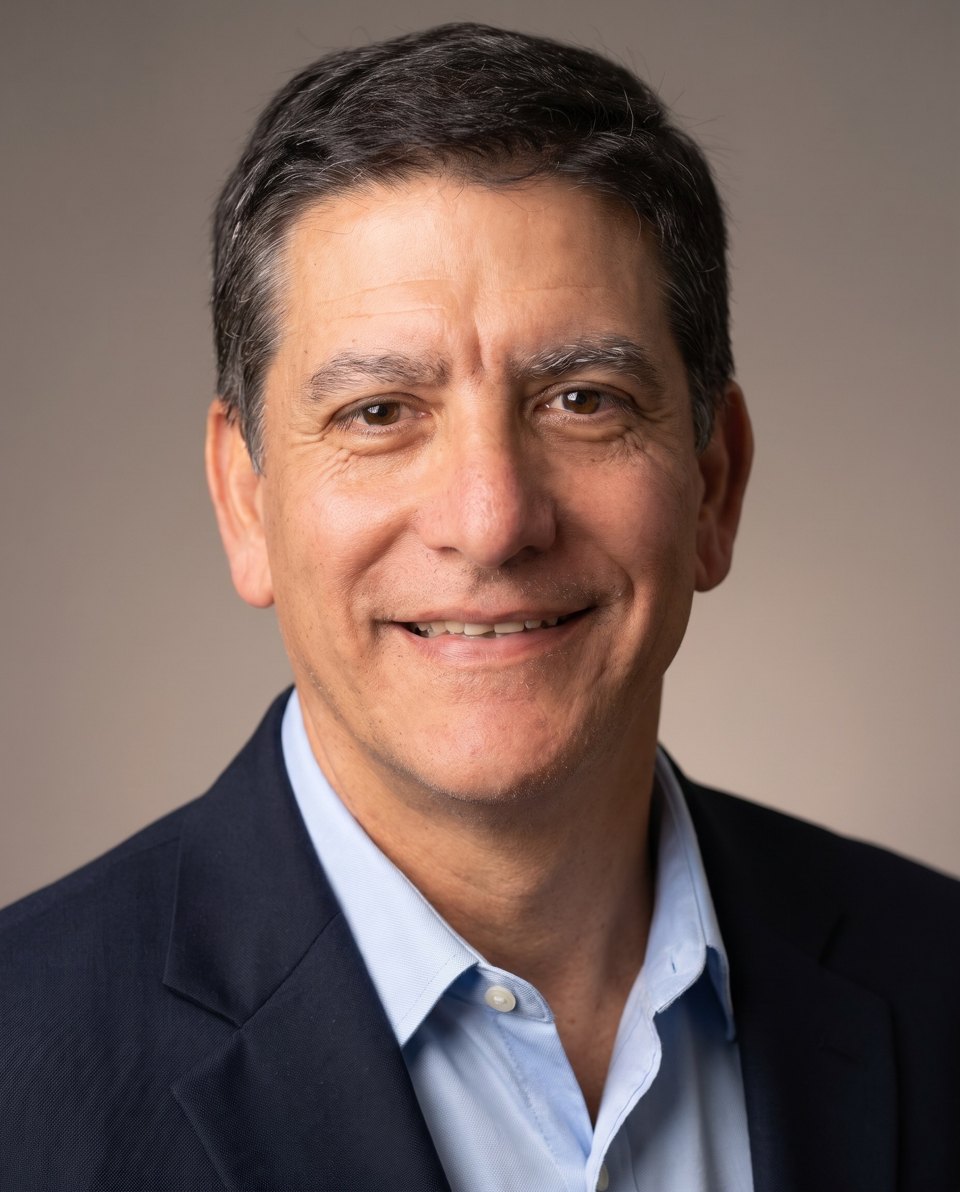
Tomas Alvarez
- Katy & Houston
- (713) 496-0060
- English y español
Electrical engineer. MBA, University of Houston. Project management, Rice University. Entrepreneur and early AI adopter. Author of HYTHE, a coordination system that lets AI agents from different providers share one memory and work as one team.
I set it up with your team, check the numbers with you, and stay the person you call.
How we work
- 01
Check
A free 20-minute call first. If there’s a fit, a paid check of one real week of your calls and orders.
- 02
Set up with your team
Your people decide what gets caught and where the note goes.
- 03
Review in writing
What changed, what it’s worth, keep or stop. No automatic retainer.
Real work
Transcript
Real work: how this page was built. The owner’s note on the first draft: “still too texty … we need to show the human edge”.
Where it started: the owner said it read too much like text.
Two rounds of low-fi mocks, each one reviewed by the owner.
Generated role scenes, checked one by one. Rejects stay out.
Every change in a pull request, tested before the owner signs off.
The result: the owner’s own people and AI, on the same side.
The same method, on our own work. Ascend Consult, Katy, (713) 496-0060.
How we teach AI
Transcript
One plain business question, put to three AI models.
On screen, the question: “A small HVAC repair company in Katy, Texas (6 technicians, one office manager) misses calls after 6 pm and on weekends. How should they handle after-hours calls?”
The team follows along on their own laptops.
Where the models agree, and where they don’t. All three suggest an answering service, an on-call rotation for the technicians and an after-hours fee. Two of the three suggest online booking, or an office-manager review each morning.
The team weighs the answers together.
AI brings the options. Your team makes the call. Team decision: an answering service screens emergencies, technicians rotate on call, a posted after-hours fee, and the office manager reviews every overnight call each morning.
How we teach AI: one question, several models, your team decides. Ascend Consult, Katy, (713) 496-0060.
BEFORE WE START
Questions from business owners.
- Does it replace my staff?
- No. It is designed to back your team up: collect the details, prepare a clear note and hand it to the person you choose. Your people keep control of decisions and follow-up.
- What happens after hours?
- We can set up a workflow to capture the request and pass it to your team. We agree the hours, the fallback and who follows up before a pilot starts. Your team confirms availability and any next steps; this is not an emergency dispatch service.
- Do you handle Spanish?
- English and Spanish intake is one of the workflows we offer, with notes prepared for your team. We check the language, the details to collect and the human handoff with you before putting it to work.
- What does it cost to find out?
- The first check is a free 20-minute call. If a paid review of one workflow would be useful, we agree its scope and cost with you before starting.
- How do we measure if it is worth it?
- We start with a real week of your calls, orders or RFQs. We agree what to measure, such as handling time, useful callbacks or quote turnaround, then compare the change and its costs in writing. An estimate is not a promise of savings.
- Do I have to sign a contract?
- There is no automatic retainer. We agree the scope and terms before paid work begins. Ongoing support is a separate choice after we review what changed and whether it is worth continuing.
WORKFLOW INTAKE
Send the messy version of your inbound.
Request a free 20-minute fit conversation. Tell us about your call and message intake, missed or after-hours inquiries, and where a human handoff is needed. We’ll decide together whether a paid one-workflow diagnostic would be useful.
First focus: trades and contractors in Katy and Houston. Start with one call or message intake workflow.